


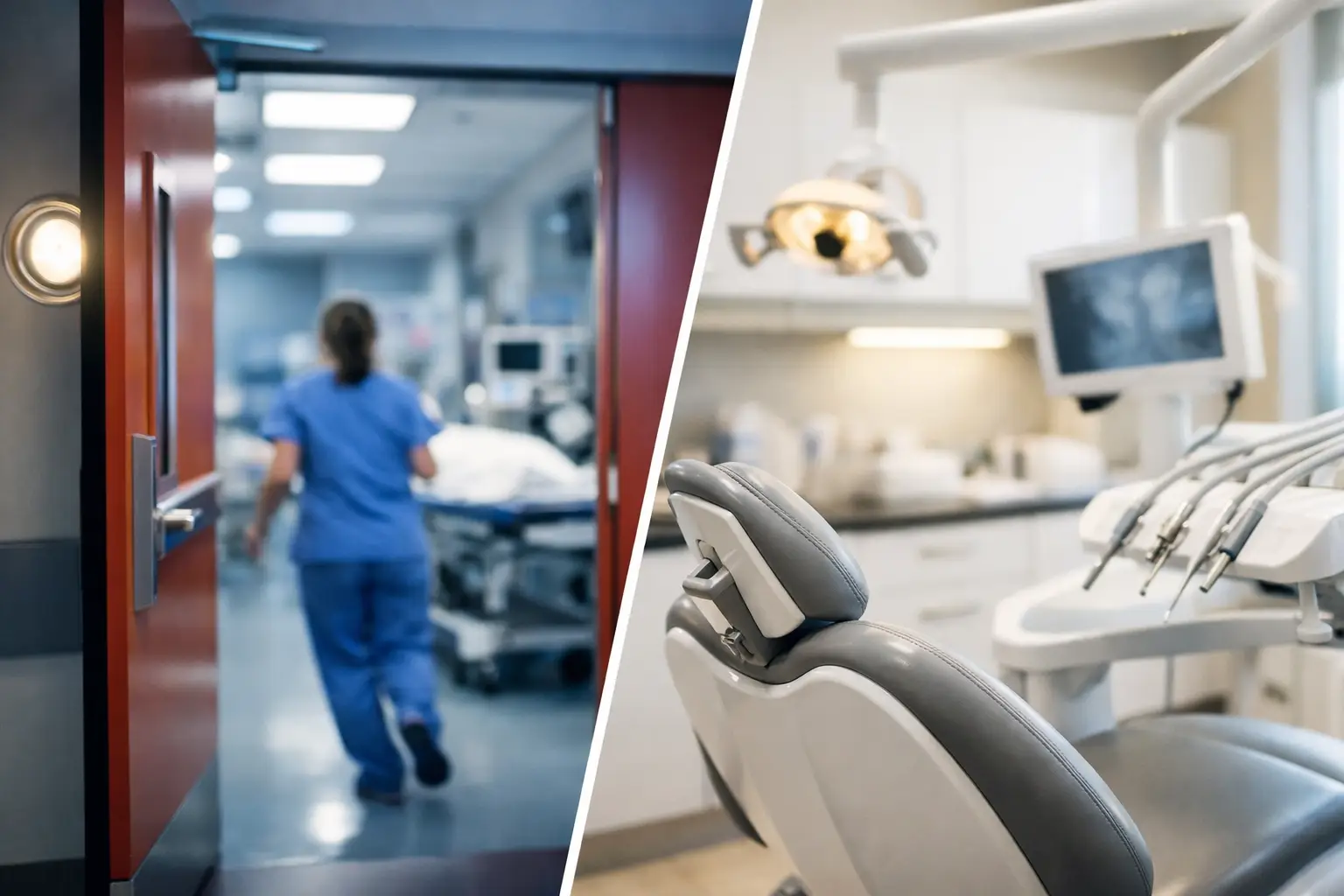
A cracked tooth during dinner, a child with a toothache at bedtime, or sudden facial swelling can make one question feel urgent: emergency room versus dentist – where should you go? The right choice depends on whether the problem is a dental emergency that needs prompt treatment or a medical emergency that could affect breathing, swallowing, or overall health.
Most tooth, gum, crown, and jaw concerns are best treated by a dentist. A dental office can diagnose the source of the problem and provide treatment such as a filling, crown repair, root canal therapy, extraction, or care for an injured tooth. An emergency room can be essential when symptoms are severe or life-threatening, but it usually cannot provide the definitive dental treatment needed to solve the cause of a tooth problem.
Emergency Room Versus Dentist: The Key Difference
A dentist is equipped to treat problems involving your teeth, gums, bite, dental restorations, and many forms of oral pain or infection. When you call for an emergency dental appointment, the team can ask about your symptoms, help determine how quickly you need to be seen, and prepare for the treatment most likely to bring relief.
The emergency room is the right setting when a dental problem is accompanied by signs that your airway, circulation, or general health may be at risk. ER clinicians can evaluate serious infection, control heavy bleeding, address major trauma, provide medical stabilization, and arrange further care when necessary. They may prescribe medication for pain or infection when appropriate, but medication alone does not remove a decayed tooth, drain every dental infection, repair a broken restoration, or replace a lost filling.
That distinction matters. If your condition is dental but not medically dangerous, seeing a dentist first can save time and help you get the treatment you actually need.
Go to the Emergency Room for Serious Warning Signs
Call 911 or go to the nearest emergency room right away if you have trouble breathing or swallowing, swelling that is spreading into the neck or around the eye, or swelling that is rapidly getting worse. These symptoms can signal a serious infection or allergic reaction and should not wait for a dental appointment.
The ER is also the better first choice after a major accident involving the face or head. Seek immediate medical attention for loss of consciousness, confusion, vomiting, severe headache, suspected broken jaw, deep facial cuts, uncontrolled bleeding, or an injury that may involve your neck.
Other reasons to choose the emergency room include:
- Bleeding from the mouth that does not slow after firm, steady pressure
- A high fever along with facial swelling, weakness, confusion, or feeling severely ill
- A jaw injury that makes it difficult to open or close your mouth normally
- Signs of a severe allergic reaction, including hives, wheezing, or swelling of the lips, tongue, or throat
If you are uncertain and symptoms feel severe, it is always reasonable to choose urgent medical evaluation. Your safety comes first.
When an Emergency Dentist Is Usually the Better Choice
A severe toothache without breathing or swallowing problems is usually a dental emergency. Pain may come from deep decay, a cracked tooth, an infected nerve, gum disease, a failing filling, or an abscess near the tooth root. The sooner a dentist identifies the cause, the better the chance of relieving pain and preserving the tooth.
Call a dentist promptly for a chipped, cracked, loose, or knocked-out tooth. Timing is especially important when a permanent tooth has been completely knocked out. If possible, pick it up by the crown, which is the chewing surface, rather than the root. Gently rinse it with milk or saliva if it is dirty, do not scrub it, and try to place it back into the socket if you can do so safely. If that is not possible, keep it moist in milk or in your mouth next to your cheek if there is no risk of swallowing it. Then contact a dentist immediately.
Lost crowns, broken fillings, painful dentures, loose bridges, and a tooth that suddenly becomes sensitive to pressure should also be evaluated by a dentist. These issues may not require a trip to the ER, but waiting can allow more damage, pain, or infection to develop.
Swelling limited to the gum near a tooth, a pimple-like bump on the gums, bad taste from drainage, or increasing tenderness can point to a dental infection. Contact a dental office as soon as possible, even if the pain temporarily improves. Infection can remain present after pressure drains, and treatment may be needed to address the source.
What to Do While You Arrange Care
Small actions at home can make you more comfortable, but they are not a replacement for an examination. Rinse gently with warm salt water to help keep the area clean. A cold compress on the outside of the face may reduce swelling after a dental injury or ease discomfort. Use over-the-counter pain medicine only as directed on the label and only if it is safe for you based on your health history and other medications.
Avoid placing aspirin directly on a tooth or gums. It can burn soft tissue and will not treat the source of the pain. Do not use sharp objects to dig around a broken tooth, loose filling, or gum swelling. If a crown comes off, keep it in a clean container and bring it to your appointment rather than trying to force it back into place with household glue.
If bleeding follows an extraction or injury, bite gently but firmly on clean gauze for 20 to 30 minutes without repeatedly lifting it to check. If bleeding remains heavy or does not slow, seek urgent medical guidance.
Why Waiting Can Make Dental Emergencies Harder
Dental pain can be tempting to postpone when it comes and goes. Unfortunately, a tooth does not heal itself once decay reaches the inner nerve, a crack extends deeper, or an infection develops. What may begin as a manageable cavity can progress to a need for root canal therapy, a crown, or extraction.
Prompt care also supports comfort. Emergency appointments are not only for dramatic injuries. They are for the pain that keeps you from sleeping, eating, working, or caring for your family. A compassionate dental team can assess what is happening, explain your options clearly, and help you make a practical treatment decision.
For Connecticut families, calling your regular dental office first is often the most direct route for urgent tooth problems. At Katz Family Dental Care, patients can receive broad general and emergency dental care in a familiar setting, with treatment options explained step by step. If you are a new patient, calling ahead also gives the office a chance to discuss availability and insurance questions before your visit.
A Simple Way to Make the Decision
Think first about your whole-body symptoms. If breathing, swallowing, consciousness, severe bleeding, a major facial injury, or rapidly spreading swelling is involved, choose emergency medical care. If the problem is centered on a tooth, gum, restoration, or routine dental injury and you are otherwise stable, call a dentist for the earliest available emergency appointment.
When you call, describe when the symptoms began, where the pain or swelling is located, whether you have a fever, and whether an injury occurred. Let the team know about medications, allergies, pregnancy, medical conditions, and any recent dental treatment. Clear information helps them guide you appropriately.
Dental emergencies rarely arrive at a convenient time, but you do not have to sort them out alone. Trust the warning signs, seek immediate medical help when your health is at risk, and let a dental team address the tooth problem before a small concern becomes a larger one.