


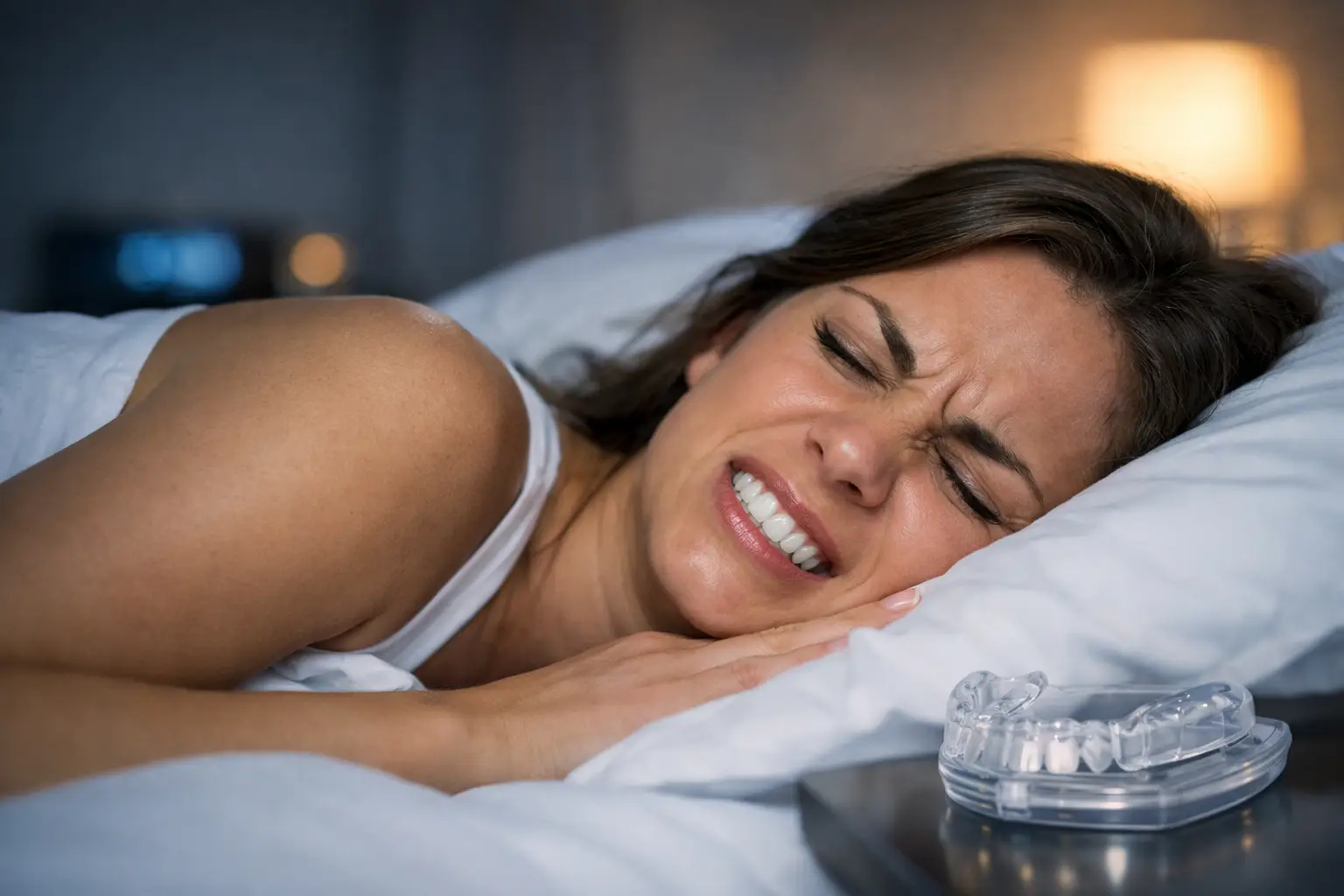
A sore jaw can feel like an ordinary part of a stressful week, especially when you are rushing to work, helping children get ready for school, or caring for family. But when that soreness shows up most mornings, it may be one of the signs of nighttime teeth grinding. Many people grind or clench while asleep without realizing it until a partner hears it, a tooth becomes sensitive, or their dentist notices wear during an exam.
Nighttime teeth grinding, also called sleep bruxism, can put significant pressure on teeth, jaw muscles, and dental restorations. The good news is that a dental visit can help identify the pattern early and create a practical plan to protect your smile.
Signs of nighttime teeth grinding that are easy to miss
Teeth grinding is not always loud. Some people clench tightly without making a sound, and others grind only during certain periods of stress or disrupted sleep. Paying attention to changes in your mouth, jaw, and morning routine can help you know when it is time to schedule an evaluation.
1. Jaw soreness or tightness in the morning
Waking up with tired, tight, or aching jaw muscles is one of the more common clues. You may notice that opening wide to yawn feels uncomfortable, chewing breakfast takes extra effort, or your jaw feels better later in the day.
Grinding keeps the jaw muscles working when they should be resting. Occasional soreness can happen for many reasons, but recurring morning discomfort is worth discussing with your dentist, particularly if it is getting stronger or lasting longer.
2. Frequent morning headaches or facial pain
A dull headache at the temples, pain near the ears, or tension across the cheeks may be connected to clenching and grinding overnight. The muscles used for chewing extend into the face and head, so overworking them can create discomfort that does not feel like a dental problem at first.
Headaches have many possible causes, including dehydration, migraines, sinus concerns, and sleep issues. A dentist can look for dental evidence of bruxism, but persistent, severe, or new headaches should also be discussed with your medical provider.
3. Teeth that look flatter, shorter, or more worn
Tooth enamel is strong, but repeated grinding can gradually smooth down the chewing surfaces. The changes can be subtle at home. You may simply feel that your teeth do not fit together the same way they used to, or notice that the edges of your front teeth look more uneven or translucent.
During a routine exam, your dentist can compare wear patterns and look for areas where enamel has been lost. Early wear does not always require major treatment, but monitoring it matters. Without protection, continued grinding can expose the inner tooth structure and increase the risk of damage.
4. Tooth sensitivity, small chips, or damaged dental work
Grinding places force on individual teeth, fillings, crowns, veneers, bridges, and implants. A tooth that suddenly reacts to cold drinks, a tiny chip on an edge, or a filling that feels rough may be a warning sign.
Not every chip means you grind your teeth, and sensitivity can come from cavities, gum recession, or a cracked tooth. Still, these changes deserve prompt attention. Addressing a small issue early is generally simpler than waiting until a tooth fractures or a restoration comes loose.
5. A partner hears grinding while you sleep
This is often the clearest sign, even though the person grinding may have no awareness of it. Your partner may describe a scraping, clicking, or crunching sound during the night. If you sleep alone, you may never hear it, which is why the other symptoms and dental exam findings are also useful.
If a child grinds their teeth, parents may hear the sound from another room. It can be unsettling, but grinding in children does not automatically mean there is a serious problem. Their dentist can check growth, tooth wear, bite development, and any related sleep or airway concerns.
6. Worn cheek tissue or tooth marks on the tongue
People who clench may also press their cheeks or tongue against their teeth. You might notice a pale line along the inside of the cheek, tenderness, or scalloped impressions along the sides of the tongue. These findings are not proof of nighttime grinding on their own, but they can add useful information during an exam.
7. Sleep that does not feel restorative
Grinding can occur alongside poor sleep, frequent awakenings, snoring, or breathing interruptions. You may wake up tired despite spending enough time in bed. Because sleep bruxism and sleep-disordered breathing can overlap, it is helpful to mention sleep symptoms, loud snoring, gasping, or daytime fatigue during your visit.
A night guard may protect teeth, but it is not a substitute for evaluating possible sleep apnea. If your symptoms suggest a breathing concern, your dental and medical providers can guide you toward the appropriate next step.
Why do people grind their teeth at night?
Stress and anxiety are common contributors, but they are not the full story. Sleep bruxism can be influenced by sleep quality, certain medications, caffeine or alcohol close to bedtime, tobacco use, airway concerns, and individual muscle and bite patterns. It may come and go during different seasons of life.
That is why it helps to avoid blaming yourself or assuming stress relief alone will solve the problem. Relaxation habits, regular exercise, and a consistent bedtime routine may support better sleep, but persistent symptoms should still be checked. The right approach depends on what is happening in your mouth and what may be affecting your sleep.
What happens during a teeth-grinding evaluation?
A dentist can often identify clues by examining tooth wear, cracks, gum tissue, jaw muscles, and existing restorations. They may ask when discomfort occurs, whether you wake with headaches, what medications you take, and whether anyone has noticed snoring or grinding sounds.
X-rays may be recommended when a tooth is painful, cracked, or has signs of infection or damage below the gumline. Your dentist will also check how your teeth come together and whether a specific tooth is carrying too much pressure. This is not about judging your habits. It is about finding the most likely cause of the strain and protecting your oral health before a small concern becomes an urgent one.
Treatment can protect teeth while addressing the cause
For many adults, a custom-fitted night guard is an effective part of treatment. Unlike a one-size-fits-all option, a professionally made guard is designed around your teeth and bite. It creates a protective barrier between upper and lower teeth and can reduce damage from clenching and grinding.
A night guard does not necessarily stop the grinding behavior itself, and it will not correct untreated sleep apnea or other medical concerns. Its primary role is protection. Your dentist may also recommend repairing damaged fillings or crowns, treating a cracked tooth, adjusting a restoration when appropriate, or coordinating with your physician or sleep specialist if your symptoms point to a broader sleep issue.
Be cautious about trying to change your bite permanently based only on jaw soreness or an online recommendation. Bite adjustments and extensive dental work should be considered carefully after a thorough examination. The best plan is one that addresses your actual findings, not a one-size-fits-all promise.
When to make an appointment
Schedule a dental visit if you have ongoing jaw pain, repeated headaches on waking, visible tooth wear, sensitivity, or reports of grinding during sleep. At Katz Family Dental Care, our team can evaluate the health of your teeth and restorations, discuss your symptoms clearly, and help you understand your options.
Call promptly if you have a broken tooth, a loose crown or filling, swelling, severe pain, or trouble opening your mouth. These symptoms may need more immediate care and should not wait for your next cleaning.
Your teeth should be able to rest while you sleep. If mornings regularly begin with a tight jaw, a headache, or a tooth that feels different, a simple dental conversation can be a reassuring first step toward more comfortable days and better-protected nights.