


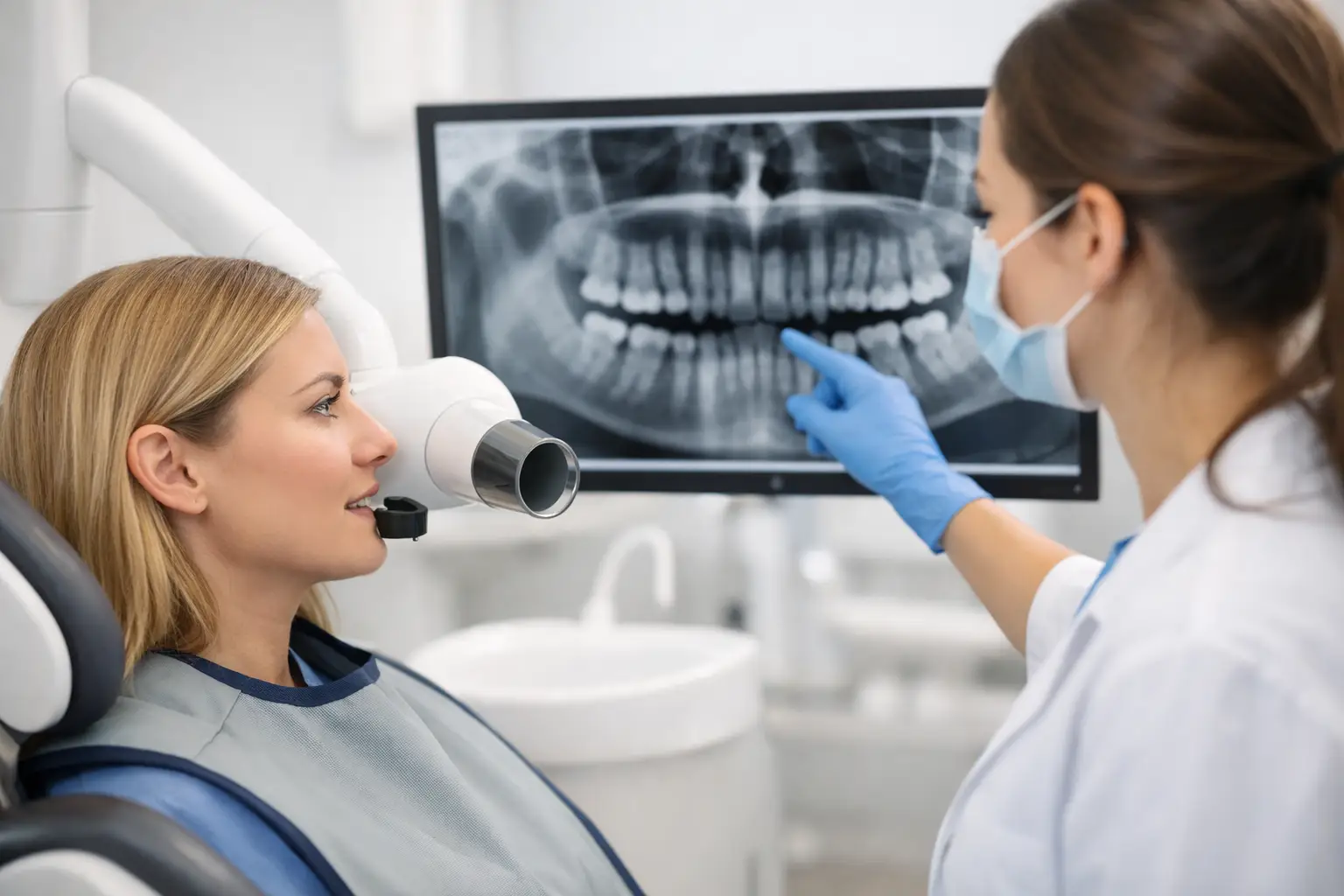
A cavity can grow between two teeth without causing pain. An infection can develop beneath an older crown without being visible in a mirror. That is why patients often ask, “are x-rays safe?” when dental images are recommended. The reassuring answer is that dental X-rays are considered safe when they are prescribed thoughtfully and taken with modern equipment and protective practices.
Dental X-rays do use a small amount of ionizing radiation, so they are never taken simply out of habit. Your dentist weighs the expected benefit of seeing something that cannot be found during a visual exam against the very low exposure involved. For many patients, an X-ray helps identify a concern early, when treatment may be simpler, more comfortable, and less costly.
Are X-Rays Safe for Dental Patients?
For most patients, yes. Modern dental X-rays use very low radiation doses, particularly when digital sensors are used. These sensors generally require less radiation than older film systems while producing detailed images your dental team can use to evaluate your teeth, roots, jawbone, and areas between teeth.
The amount of radiation from a dental X-ray is small, but small does not mean it should be ignored. Dentistry follows the principle of using the lowest reasonable dose needed to obtain useful diagnostic information. This means your dentist should take images only when they will help make a clinical decision about prevention, diagnosis, or treatment.
Your care also matters in the decision. A patient with healthy teeth, low cavity risk, and no symptoms may not need the same images as someone with frequent cavities, gum disease, tooth pain, a broken tooth, or a history of root canal treatment. There is no single X-ray schedule that fits every member of a family.
Why Your Dentist May Recommend X-Rays
A dental exam is essential, but it cannot reveal every problem. Your dentist can see the outer surfaces of your teeth and gums, yet many areas remain hidden. X-rays provide a view below the gumline and inside the tooth that supports a more complete diagnosis.
Bitewing X-rays are commonly used to check for decay between back teeth, where a toothbrush and visual exam cannot always tell the full story. Periapical X-rays show an entire tooth, including its root and the surrounding bone. They can help investigate pain, swelling, trauma, or a possible infection. A panoramic X-ray gives a broad view of the jaws, teeth, sinuses, and jaw joints, which may be helpful for developing teeth, extractions, implants, or orthodontic planning.
The value of an image is often in what it helps prevent. Finding a small cavity between teeth may allow for a straightforward filling rather than waiting until the tooth develops a painful infection. Seeing bone changes around a tooth can help your dental team discuss gum treatment before the problem becomes more serious.
How Dental Offices Keep Radiation Exposure Low
Safety starts before the X-ray is taken. Your dentist reviews your health history, symptoms, prior dental records, and the findings from your exam. If recent, usable images already exist, repeating them may not be necessary.
Modern offices also use equipment designed to focus the X-ray beam on a small, specific area. Digital sensors, proper positioning, and carefully selected image settings help reduce the chance that an image needs to be retaken. Your dental team will leave the room or stand behind a protective barrier while the image is captured, because staff take X-rays many times a day while patients generally receive them only as needed.
Protective shielding practices may vary based on the type of X-ray, the equipment used, and current professional guidance. If you have questions about the protection offered at your visit, please ask. A good dental team welcomes those questions and will explain what is being done to keep your exposure as low as reasonably achievable.
Are Dental X-Rays Safe During Pregnancy?
Tell your dentist if you are pregnant, think you may be pregnant, or are trying to become pregnant. This information helps your team plan care with you and document your health history accurately.
Necessary dental X-rays can generally be taken during pregnancy when appropriate safety measures and modern techniques are used. In some situations, however, an image can wait, especially if it is for routine monitoring and you have no symptoms. The right choice depends on why the X-ray is needed. A painful tooth, swelling, trauma, or concern for infection should not be ignored because pregnancy is involved.
Your dentist and physician can coordinate if you have a high-risk pregnancy or a medical condition that calls for additional planning. The goal is never to create worry. It is to protect both your comfort and your health by making a clear, informed decision.
What About X-Rays for Children?
Children are still growing, and their dental needs can change quickly. This makes parents understandably careful about any radiation exposure. It also makes targeted imaging useful in certain situations, such as checking for cavities between baby teeth, monitoring how permanent teeth are developing, evaluating an injury, or planning orthodontic care.
A child does not automatically need X-rays at every cleaning appointment. The dentist considers the child’s cavity risk, age, brushing and eating habits, spacing between teeth, symptoms, and previous findings. Children with close contacts between teeth or a history of cavities may benefit from images more often than children with a lower risk.
At Katz Family Dental Care, we take time to explain what an image is for in plain language, so children and parents know what to expect. A calm explanation and proper positioning can make the process quick and manageable, even for patients who feel nervous about dental visits.
When It Makes Sense to Ask Questions
You deserve to understand any recommended part of your care. If dental X-rays are suggested, you can ask what the images are checking for, whether you have had similar images recently, and how the result may affect your treatment plan. These are practical questions, not difficult ones.
It is also helpful to tell your dentist about prior X-rays from another office. If images can be transferred and are recent enough to be clinically useful, your dentist may be able to avoid taking duplicates. Let the team know about pregnancy, recent radiation treatment, or any concerns that make you uncomfortable as well.
Sometimes the answer will be that an X-ray can wait. Other times, waiting could mean missing a problem that is already causing damage without obvious symptoms. Your dentist should be able to explain that trade-off clearly and help you decide what feels right for your situation.
A Small Step That Can Protect Your Smile
Dental X-rays are one part of preventive care, not a replacement for an exam, cleaning, brushing, flossing, or regular visits. When they are selected based on your individual needs, they give your dentist information that helps protect teeth you may otherwise not realize are at risk.
If you are due for a checkup, have tooth pain, notice swelling, or are concerned about a recommendation for imaging, bring those questions to your appointment. Clear answers and a personalized plan can make the next step feel much easier.