


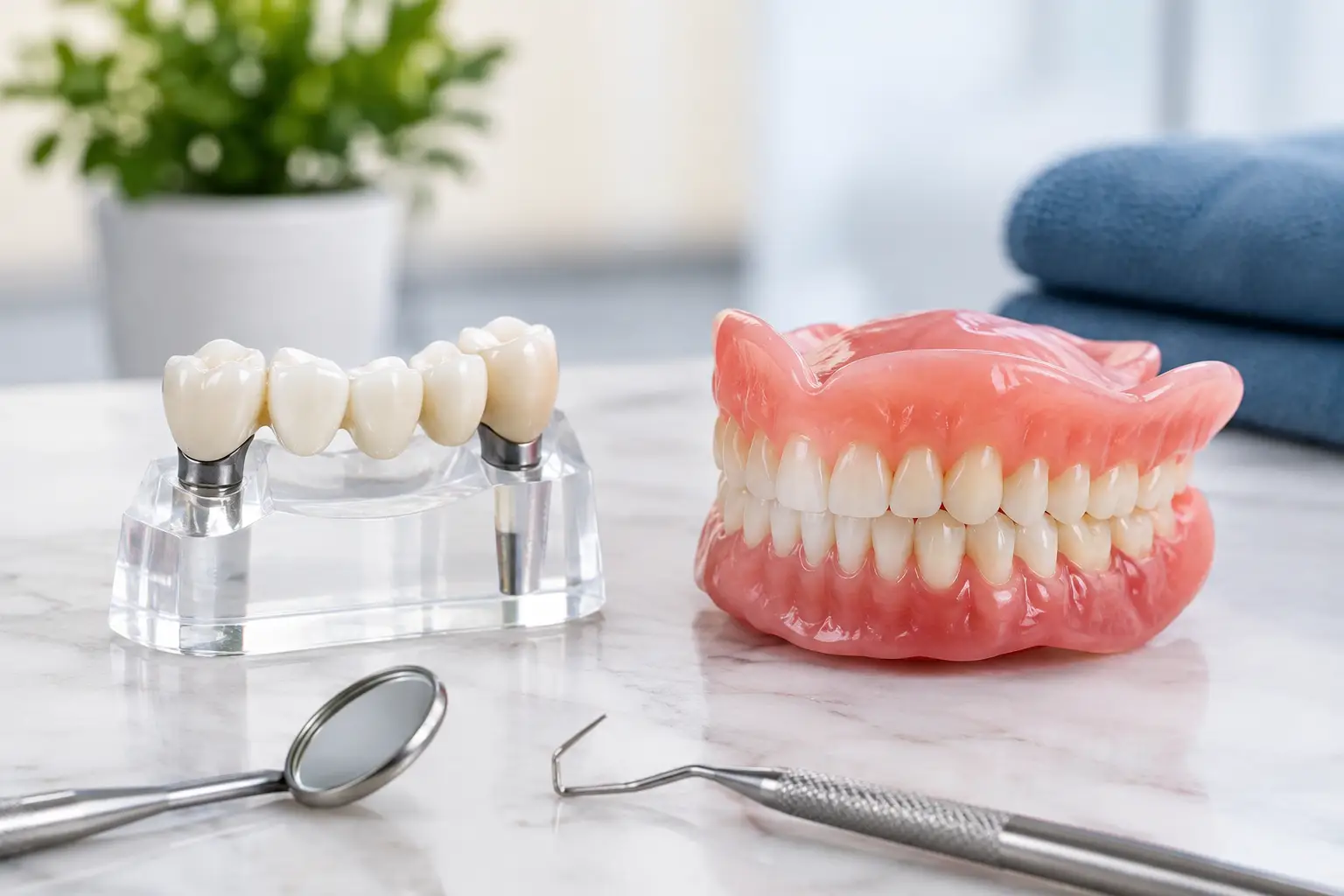
A missing tooth can change more than your smile. It may make chewing less comfortable, affect how you speak, or leave you hesitant to laugh in photos. When considering a dental bridge versus denture, the right choice is not simply about replacing a tooth quickly. It is about finding an option that fits your oral health, daily routine, budget, and plans for the years ahead.
Both bridges and dentures can restore function and appearance. Each has meaningful advantages, and each comes with care requirements and limitations. A conversation with your dentist, including a close look at your remaining teeth and gums, is the best way to choose with confidence.
Dental Bridge Versus Denture: The Main Difference
A dental bridge is a fixed restoration. It fills a gap by attaching an artificial tooth, called a pontic, to crowns placed on the teeth beside the space. In some cases, a bridge may be supported by dental implants instead of natural teeth. Once it is placed, a traditional bridge stays in your mouth and is not removed for cleaning.
A denture is a removable appliance that replaces one or more missing teeth. A partial denture fills gaps while working around the natural teeth you still have. A full denture replaces all teeth in an upper or lower arch. Dentures may rest on the gums, connect to remaining teeth, or be secured with implants.
The practical difference is simple: a bridge feels and functions more like a permanent part of your mouth, while a denture is designed to be taken out for cleaning and, in many cases, overnight rest.
When a Dental Bridge May Be a Good Choice
A bridge can be an excellent option when one tooth, or a small number of nearby teeth, is missing and the supporting teeth are healthy enough to carry crowns. Because it is fixed in place, many patients find that a bridge is easy to adapt to. There is no appliance to remove, and chewing and speaking often feel more natural after the adjustment period.
A bridge can also prevent neighboring teeth from drifting into an empty space. Teeth tend to move when there is room to move, which can affect your bite and make cleaning more difficult over time. Replacing the missing tooth helps maintain the balance of your smile.
There are trade-offs. A traditional bridge requires the teeth on either side of the gap to be reshaped for crowns. If those teeth already have large fillings, cracks, or existing crowns, this may be a sensible use of them. If they are completely healthy and untouched, your dentist may want to discuss other approaches, including an implant-supported restoration.
Cleaning under a bridge takes attention. You will brush normally, but you will also need to clean beneath the artificial tooth with a floss threader, special bridge floss, or an interdental brush. Food and plaque can collect in this area, so consistent home care and regular cleanings are essential.
When a Denture May Be a Good Choice
Dentures are often a practical solution when several teeth are missing, teeth are missing in different areas of the mouth, or the remaining teeth cannot support a bridge. A partial denture can restore spaces without requiring crowns on every neighboring tooth. For someone who needs to replace a full arch of teeth, a complete denture may be the most direct restorative option.
Dentures can also be a good choice when affordability is a major consideration. Treatment costs vary based on materials, the number of teeth being replaced, needed extractions, gum health, and whether implants are involved. Your dental team can review your treatment plan and help you understand the expected costs before care begins.
The adjustment period for dentures can take patience. New dentures may initially feel bulky, and certain foods can require more care while you learn how the appliance feels. A well-made denture should be comfortable, but it may need adjustments after delivery as your mouth adapts.
Dentures also need daily attention outside the mouth. They should be removed and cleaned as directed, then stored safely to prevent drying or damage. Even if you wear a full denture, regular dental visits remain important. Your gums, jawbone, tongue, and other oral tissues still need professional evaluation.
What About Implant-Supported Dentures?
Implant-supported dentures offer a middle ground for many patients. Dental implants are placed in the jawbone and used to stabilize a removable denture or support a fixed full-arch restoration. This can reduce movement, improve chewing confidence, and help preserve jawbone compared with a conventional denture alone.
Not everyone is a candidate for implants immediately. Bone levels, gum health, medical history, healing ability, and personal goals all matter. If implants are something you are considering, your dentist can explain whether they may fit into your long-term treatment plan.
Comfort, Appearance, and Daily Life
Comfort is personal. Some patients appreciate the secure feel of a bridge because it stays in place day and night. Others prefer a removable partial denture because it does not require altering the teeth next to a gap. The best option is the one that restores function without creating ongoing stress or discomfort.
Appearance matters, too. Modern bridges and dentures are designed to blend with natural teeth and support a confident smile. A bridge is typically matched to the color and shape of the surrounding teeth. A partial denture may use tooth-colored materials and discreet clasps, depending on the design. Your dentist can talk honestly with you about what will look most natural in your specific smile.
Your eating habits may influence the decision. A bridge generally allows for a wider range of chewing with less awareness of the restoration. Removable dentures can work very well, but sticky foods, hard nuts, and tough meats may take more caution, especially during the first weeks. Implant support can improve stability for denture wearers who want more security.
How Long Do Bridges and Dentures Last?
Neither restoration should be viewed as maintenance-free or permanent forever. With strong home care and regular dental visits, a bridge may last many years. Its longevity depends greatly on the health of the supporting teeth, the fit of the restoration, your bite, and how effectively plaque is removed around and beneath it.
Dentures also wear over time. Your gums and jawbone naturally change shape after tooth loss, which can cause a denture to loosen. Relining, adjustment, repair, or replacement may be needed to keep it fitting comfortably. A denture that rubs, clicks, slips, or causes sores should not be ignored. Small fit problems can become larger problems when left unaddressed.
Grinding or clenching can affect either option. If you wake with jaw soreness, notice worn teeth, or have a history of broken restorations, let your dentist know. A nightguard or changes to the treatment design may help protect your investment.
Questions to Ask Before You Decide
Before choosing between a bridge and a denture, ask how each option will affect your remaining teeth, how it will be cleaned, and what future maintenance may involve. It is also helpful to ask whether your gums and bone are healthy, whether an implant could be an option now or later, and how your insurance benefits may apply.
At Katz Family Dental Care, patients can discuss these choices in a comfortable, judgment-free setting. Your dentist can examine the area, take needed X-rays, review the condition of your teeth and gums, and explain treatment recommendations in clear terms. There is no one-size-fits-all answer, especially when your smile, health history, and everyday needs are unique.
If you have been living with a missing tooth or a loose, uncomfortable appliance, you do not have to settle for uncertainty. A thoughtful exam can turn a frustrating gap into a clear plan for eating, speaking, and smiling more comfortably again.