


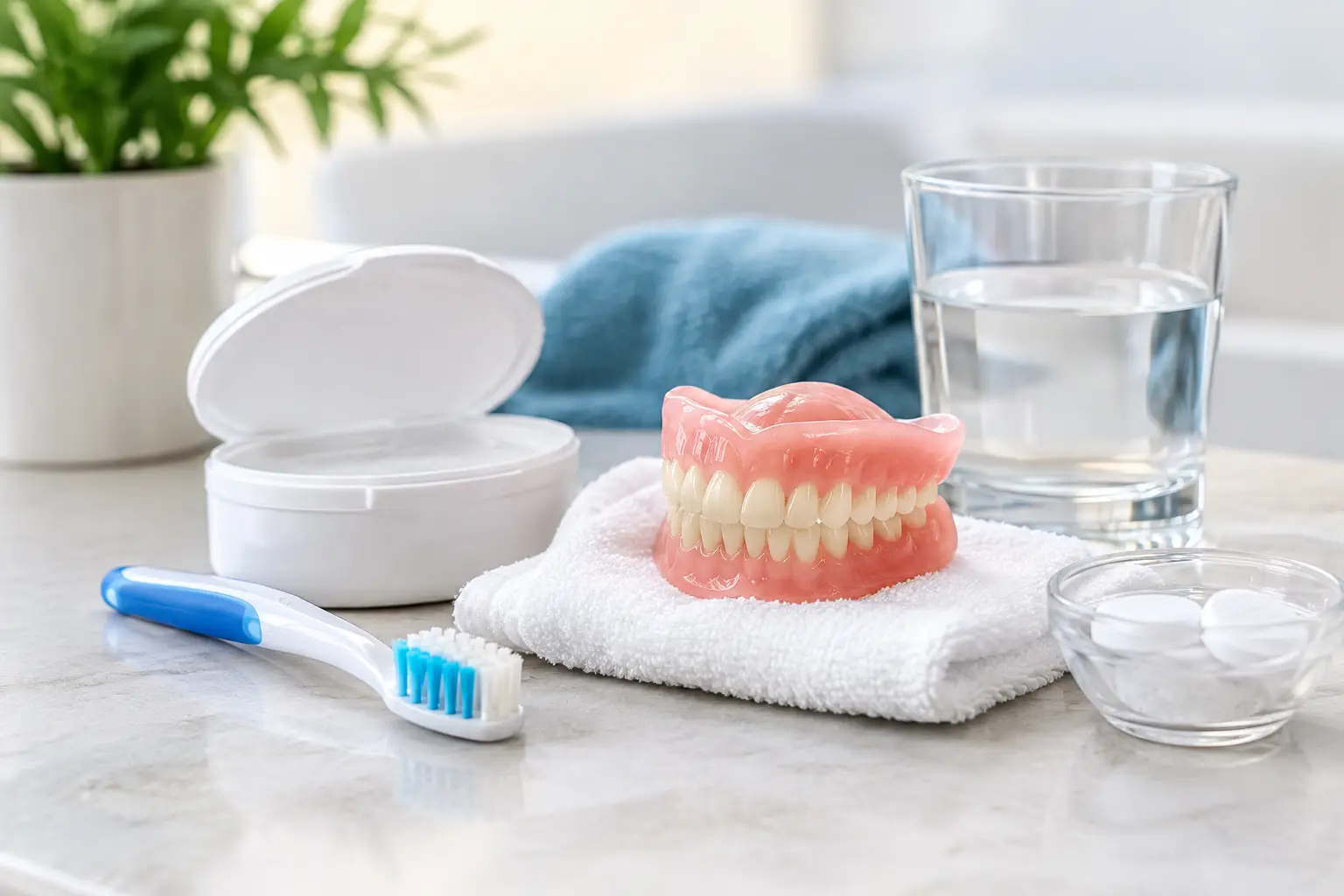
A well-fitting denture should help you smile, speak, and enjoy meals with confidence. It still needs daily care, though. Food particles, plaque, bacteria, and denture adhesive can collect on dentures just as they can on natural teeth. Knowing how to care for dentures protects your appliance, supports a healthier mouth, and helps you notice fit changes before they become painful.
Dentures are made to be durable, but they are not indestructible. A consistent routine can prevent stains, odor, damage, and avoidable irritation. Just as importantly, routine dental visits remain part of denture care. Your mouth changes over time, even after teeth are removed, and your dentist can make sure your dentures continue to fit and function properly.
How to Care for Dentures Every Day
Remove and rinse your dentures after eating when you can. A gentle rinse with cool or lukewarm water helps remove loose food debris. Avoid hot water, which can warp some denture materials and affect the fit.
At least once a day, take your dentures out for a more thorough cleaning. Use a soft denture brush or a soft-bristled toothbrush reserved only for your dentures. Brush all surfaces carefully, including the areas that rest against your gums. A nonabrasive denture cleanser is usually the right choice. Regular toothpaste can be too abrasive for many dentures and may create tiny scratches where plaque and stains can collect.
Be gentle around clips, attachments, or other components if you wear a partial denture or an implant-supported appliance. These areas may require special attention, but aggressive scrubbing can cause damage. Your dental team can show you the right technique for the type of denture you wear.
After cleaning, rinse your dentures well before putting them back in your mouth. This step is especially helpful if you use a cleansing tablet or soaking solution, since the product should not be swallowed.
Clean Your Mouth, Not Just Your Dentures
Dentures replace teeth, but they do not replace the need for oral hygiene. Before putting your dentures in, gently brush your gums, tongue, cheeks, and the roof of your mouth with a soft toothbrush. This removes bacteria and helps stimulate circulation in your gum tissue.
If you have a partial denture, be especially consistent about brushing and flossing your remaining natural teeth. The teeth that support a partial denture are valuable, and keeping them healthy helps preserve the fit and function of your appliance. Fluoride toothpaste may be recommended to help protect those teeth from decay.
A dry mouth can make dentures feel less comfortable and may contribute to irritation. Sip water throughout the day, and let your dentist know if dryness is persistent. Certain medications and health conditions can affect saliva flow, so the best solution depends on the cause.
Soak Dentures Overnight Unless Your Dentist Says Otherwise
Most removable dentures should be taken out at night. Giving your gums a break can reduce pressure and allow tissues to recover. Leaving dentures in around the clock may increase the risk of inflammation, fungal infection, and sore spots for some patients.
Store dentures in water or a denture-soaking solution when they are not being worn, unless your dentist has provided different instructions. Keeping them moist helps prevent them from drying out and changing shape. Do not use hot water, bleach, or household cleaners. These products can discolor or weaken denture materials and may not be safe for your mouth.
Keep the container out of reach of children and pets. Dentures are often damaged when they are wrapped in a napkin, left on a counter, or accidentally knocked into a sink. When cleaning them, place a folded towel in the sink or fill it with water first. If the dentures slip from your hands, the softer landing can help prevent a crack or break.
Use Denture Adhesive Carefully
Denture adhesive can give some patients a greater sense of security, especially while eating or speaking. It should not be used to compensate for dentures that are loose, broken, or causing pain. If you need more adhesive than usual, or if it no longer helps the denture stay in place, it is time to schedule an evaluation.
Use only the amount recommended on the product label or by your dentist. Clean away adhesive thoroughly each day from both your dentures and your gums. Adhesive residue can trap food and bacteria, making it harder to keep your mouth fresh and comfortable.
A properly fitted denture may still take time to get used to, particularly if it is new. Mild adjustments in speech and eating are common during the first weeks. Ongoing rubbing, clicking, slipping, or pain is not something you should simply accept.
Know What Can Harm Your Dentures
Dentures can stain and develop odor when they are not cleaned regularly, but certain habits can also shorten their lifespan. Smoking and tobacco use can stain dentures, irritate oral tissues, and increase the risk of infections. Dark beverages such as coffee, tea, and red wine may also contribute to discoloration over time.
Avoid trying to adjust dentures at home with glue, tools, or over-the-counter repair kits. A small crack, loose tooth, or bent clasp can affect how the entire appliance fits. Household glue is not designed for use in the mouth and can make a professional repair more difficult. Store the denture safely and call your dental office for guidance instead.
Be mindful of hard or sticky foods as well. Dentures are designed for eating, but biting into hard candies, ice, or very sticky foods can place extra stress on the appliance. Cutting firm foods into smaller pieces and chewing slowly on both sides of your mouth can make eating more comfortable and help keep dentures stable.
When to Call Your Dentist
A denture may need an adjustment, repair, reline, or replacement as your mouth changes. Bone and gum tissues naturally shift after tooth loss, which is why a denture that once fit well can eventually feel loose. Waiting too long can lead to sore spots, difficulty eating, and frustration with everyday activities.
Contact your dentist if you notice persistent soreness, swollen or bleeding gums, mouth sores that do not heal, a burning sensation, unusual odor, cracks, broken teeth, or a denture that slips often. You should also call if chewing becomes difficult or your bite suddenly feels different.
Regular dental visits are still necessary even if you no longer have natural teeth. During these appointments, your dentist can examine your gums, tongue, jaw, and oral tissues for concerns that may not be easy to see at home. They can also evaluate the condition and fit of your dentures, clean them professionally when appropriate, and discuss whether a reline or replacement would improve your comfort.
For patients considering more stability, dental implants may be an option to support certain dentures. Implant-supported dentures can reduce movement for eligible patients, but they are not the right choice for everyone. Your dentist can review your oral health, bone support, goals, and treatment preferences to help you make an informed decision.
A Comfortable Denture Starts With Ongoing Care
Dentures should support your daily life, not make you worry about smiling, sharing a meal, or speaking with people you love. A few minutes of careful cleaning, proper overnight storage, and routine dental care can make a meaningful difference in comfort and confidence.
If your dentures no longer feel like a good fit, a caring dental team can help you find the next step. You deserve an appliance that feels secure, a mouth that feels healthy, and guidance you can trust every step of the way.