


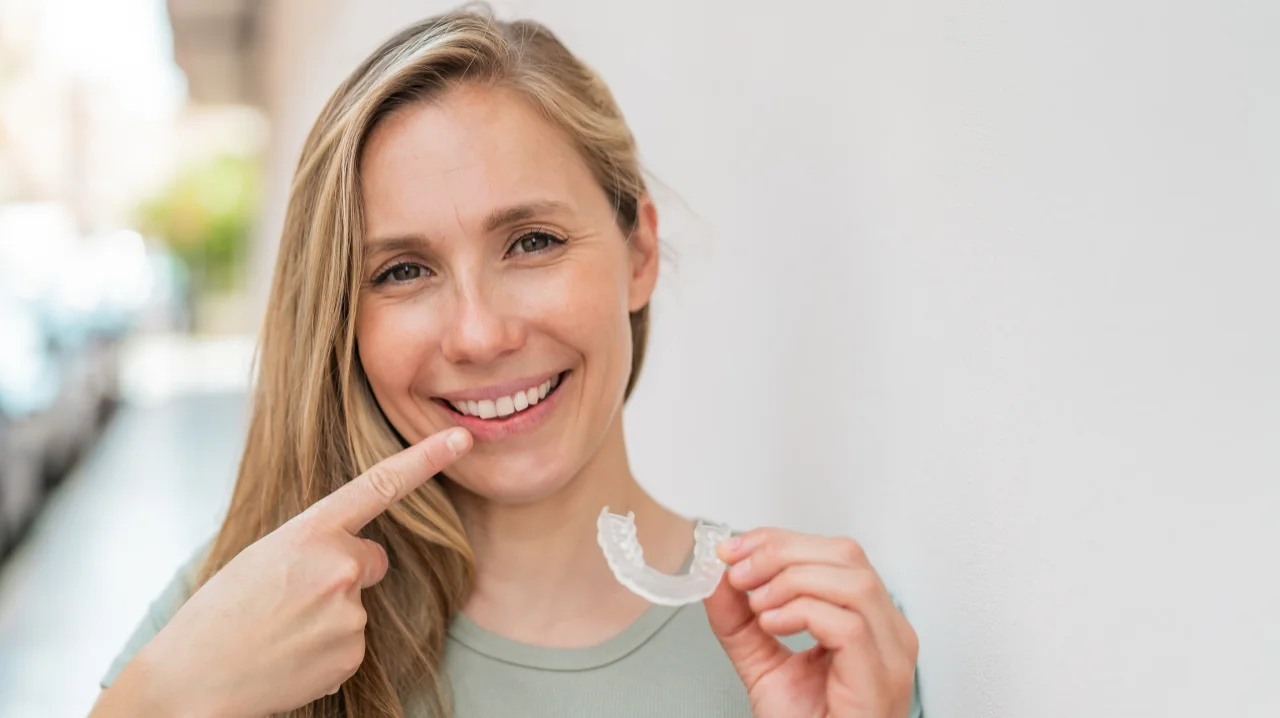
Straight teeth and a comfortable bite are not always the same thing. Invisalign help with bite problems beyond crooked teeth, including some overbites, crossbites, crowding, and spacing, when the issue is mild to moderate and the teeth and gums are healthy.
The aligners guide teeth step by step, so the upper and lower teeth meet more evenly as alignment improves. A consultation shows whether the bite concern can be treated with clear aligners and what changes to expect from treatment over the following months.
How Invisalign Treats a Bite That Needs More Than Straightening
A bite problem means the upper and lower teeth do not fit together as they should. Clear aligners move teeth gradually, and each stage shifts how the two arches line up.
The treatment plan looks at the whole bite, not only how the front teeth look. That wider view is what separates bite correction from cosmetic straightening.
Which Bite Problems Invisalign Can Correct Besides Crooked Teeth
An overbite occurs when the upper front teeth cover too much of the lower ones, and a crossbite happens when some upper teeth sit inside the lower teeth. Aligners can address many mild to moderate cases of both.
Crowding and spacing often come with these bite patterns. Closing gaps and easing overlap can improve the way the teeth meet, so several concerns are treated in one plan.
Why Bite Alignment Matters for Comfort and Wear
When teeth meet evenly, chewing pressure is shared across many teeth instead of landing on a few. Smoother contact can mean less strain on individual teeth and fewer sore spots.
Better balance also helps protect enamel from uneven wear over the years, which supports the long-term health of the smile.
Who May Be a Good Candidate for Bite Correction With Invisalign
A 2025 systematic review of clear aligner treatment identified mild to moderate malocclusions as the current indication for clear aligners.
Patients with healthy teeth and gums who can wear their aligners as directed are generally good candidates. Some bite problems call for a different or combined approach, and the dentist explains which one fits.
How a Bite Concern Is Reviewed Before Treatment Starts
The first visit looks at the teeth, the gums, and how the upper and lower teeth meet. Questions about jaw comfort, chewing, and any history of wear are part of the conversation.
From there, the dentist explains whether Invisalign suits the bite and outlines what the treatment would involve, so patients can decide with the full picture.
How Aligner Wear Supports Bite Correction
Invisalign aligners are removable, so they can come out for eating, brushing, and special occasions. Each set only works while it is in place, so wearing them as directed keeps the bite moving as planned.
Regular progress visits let the dentist confirm that the teeth are moving as expected and adjust the plan when needed.
How Long-Term Care Protects a Corrected Bite
Brushing twice a day, flossing, and keeping up with cleanings protect the teeth and gums as they settle into new positions.
Routine exams allow the dentist to check how the teeth meet over time. Small changes are easier to manage when they are noticed early.
Invisalign at Burnside Dental Care
Burnside Dental Care in East Hartford, CT, offers Invisalign clear aligners alongside family dentistry, crowns and bridges, dental implants, root canal therapy and extractions, so bite concerns can be reviewed within a full range of care.
The office at 270 Burnside Avenue serves patients from East Hartford and nearby communities. Patients are welcome to ask whether Invisalign could correct a bite problem, and the team explains each step of the plan.
Frequently Asked Questions
What happens if the teeth look straighter but the bite is not tracking as planned?
The dentist reviews how the teeth meet and may refine the plan with extra aligners or small changes to the treatment. Progress visits catch these differences early so the bite can be corrected before treatment finishes.
How does a digital treatment plan show changes in the bite over time?
A digital plan maps the movement of each tooth in stages, so the shifting relationship between the upper and lower teeth can be reviewed from start to finish. Patients can see the expected result before treatment begins.
How long can bite correction take compared with simple front tooth alignment?
Bite correction usually takes longer than front tooth alignment, because the upper and lower teeth must move into a new relationship. The length depends on the type of bite problem and how closely aligners are worn.
Why are attachments or elastics needed for some bite corrections?
Attachments are small tooth-colored bumps that help aligners grip the teeth, and elastics apply light pulling force between the upper and lower teeth. They support movements that aligners alone cannot guide as easily.