


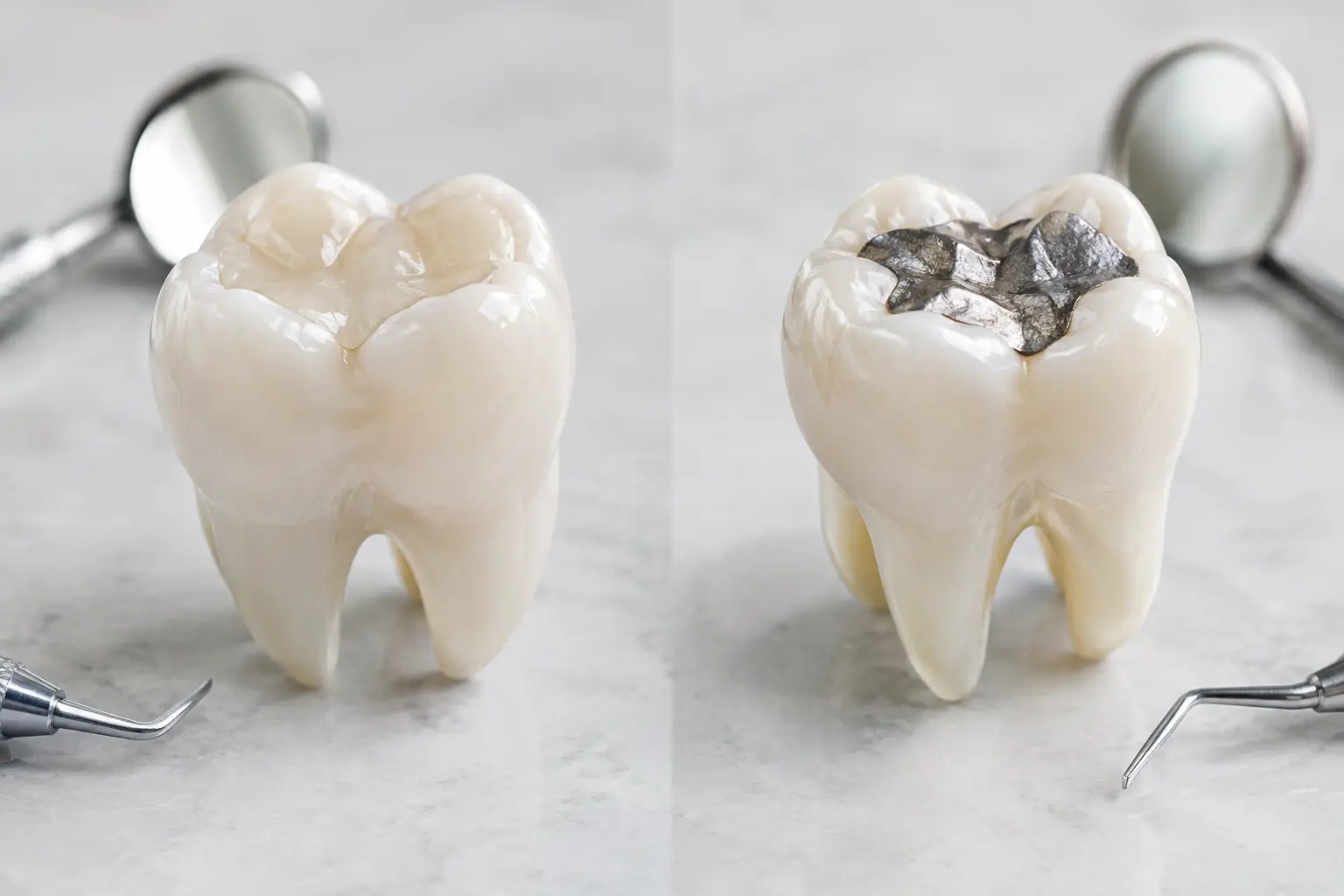
A filling may be small, but choosing its material can feel like a bigger decision – especially when it is for your child, a visible tooth, or a tooth that does most of your chewing. When comparing composite versus amalgam fillings, there is no single material that is right for every cavity. The best choice depends on where the tooth is located, how large the restoration needs to be, your bite, your goals for appearance, and the recommendations of your dentist.
At Katz Family Dental Care, we believe patients and parents should understand their options before treatment begins. A clear conversation can help you feel more comfortable moving forward with care that protects your tooth and fits your needs.
What is the difference between composite and amalgam fillings?
A dental filling replaces the portion of a tooth that has been damaged by decay or, in some cases, a small fracture. Before placing the filling, your dentist removes the decay, cleans the area, and restores the tooth so it can function comfortably again.
Composite fillings are tooth-colored restorations made from a blend of resin and fine glass-like particles. Your dentist can select a shade that closely matches the surrounding tooth, which makes composite a popular choice for teeth that show when you smile or talk.
Amalgam fillings are silver-colored restorations made from a mixture of metals. They have been used in dentistry for many years and are known for their strength, particularly in areas that handle substantial chewing pressure. Because their color is noticeable, they are more commonly considered for back teeth than front teeth.
Both materials have a long history in dental care. The decision is less about finding a universally “better” filling and more about matching the restoration to the tooth and the person receiving it.
Composite versus amalgam fillings: appearance and placement
Appearance is often the most immediate difference patients notice. Composite blends into the natural color of a tooth, so it is commonly selected for front teeth and visible areas of the smile. It may also be a good option for a back tooth if you prefer a less noticeable restoration.
Amalgam does not match tooth color. On a molar, it may not be visible during normal conversation, but it can still be noticeable when you laugh or open wide. Some patients are comfortable with that trade-off, particularly if the filling is in a hard-working area of the mouth.
Location matters beyond appearance. Front teeth are generally exposed to different forces than molars. A small cavity on the side of a front tooth may be well suited to composite. A large cavity on a molar, where the tooth absorbs repeated chewing forces, may require a more detailed discussion about the best material and whether a filling alone will provide enough support.
If a significant portion of a tooth is missing, a crown or another type of restoration may be more appropriate than a large filling. Your dentist will evaluate the size of the cavity, the remaining tooth structure, and the condition of the tooth before making a recommendation.
Strength, durability, and everyday habits
Amalgam has a reputation for durability and can perform well in back teeth. Composite fillings are also strong and widely used, but their long-term performance can depend on the size and location of the filling, the condition of the tooth, and the forces placed on it.
No filling lasts forever. Fillings can wear down, chip, loosen, stain around the edges, or develop new decay near the restoration. Grinding or clenching, chewing ice, biting hard candies, and inconsistent brushing and flossing can shorten the life of any restoration.
Composite requires careful moisture control while it is being placed. The material is applied in layers and hardened with a special curing light. This process allows for a natural-looking result, but it also means the dentist needs a clean, dry working area. In many cases, composite treatment can be completed in one visit, just as amalgam treatment often can.
For patients who grind their teeth at night, protecting restorations may involve more than choosing a filling material. A custom night guard, if recommended, can help reduce stress on teeth and dental work.
Safety questions about amalgam
Questions about dental amalgam are understandable because it contains mercury combined with other metals. Major health and dental organizations have supported the use of amalgam for many patients, while also advising certain individuals to discuss alternatives with their dental professional.
You should tell your dentist about your complete health history, including pregnancy, nursing, kidney concerns, known metal allergies, and any other medical conditions. This information helps your dental team make recommendations that consider your individual circumstances.
If you already have an amalgam filling that is intact and functioning well, it does not automatically need to be removed simply because it is silver in color. Removing a stable filling can mean removing additional healthy tooth structure. Replacement is generally considered when a filling is failing, there is decay around it, the tooth has cracked, or there is another clinical reason to restore the area.
Composite fillings do not contain mercury and are often preferred by patients seeking a tooth-colored option. As with any dental material, a dentist should review allergies, sensitivities, and treatment needs before placement.
Cost and insurance considerations
Cost can be part of the decision, and it is reasonable to ask about it before treatment begins. Composite fillings may cost more than amalgam fillings in some situations because of the material and placement technique. Insurance plans may also cover tooth-colored fillings differently depending on whether the tooth is in the front or back of the mouth.
Coverage varies by plan. Some plans pay toward a composite filling in a visible tooth but provide a different allowance for a posterior, or back-tooth, composite filling. Others may have their own limits, deductibles, waiting periods, or frequency rules.
Before your appointment, our team can help screen commercial insurance benefits and explain what information is available. Because insurance estimates are not a guarantee of payment, it is still helpful to ask about your expected out-of-pocket portion and available treatment options. Clear financial information should never be an afterthought when you are planning care for yourself or your family.
How your dentist helps you decide
The right filling starts with an examination, not a guess based on color alone. Your dentist may use X-rays, evaluate the tooth, check your bite, and look for signs of cracks or decay between teeth. They will also consider whether the tooth has had previous fillings or root canal treatment, because those factors can affect how much strength remains.
During that conversation, share what matters to you. You may prioritize a natural appearance, durability in a back tooth, cost, concerns about a particular material, or completing care around a busy work and family schedule. There is value in being direct about those priorities.
For children, the discussion may also include how easily the child can stay comfortable during treatment, where the cavity is located, and the likelihood that the tooth will naturally be lost in the near future. Parents deserve an explanation that is practical, calm, and easy to understand.
Caring for a new filling
Whether you receive composite or amalgam, good home care helps protect both the filling and the tooth around it. Brush twice daily with fluoride toothpaste, clean between teeth every day, and keep regular dental visits so small concerns can be found early.
Call your dental office if you notice pain that does not improve, a sharp edge, sensitivity that lingers, a change in your bite, or a piece of the filling coming loose. Mild sensitivity after a filling can happen, particularly with deeper cavities, but persistent discomfort should be evaluated.
The most helpful next step is a conversation based on your actual tooth, not a one-size-fits-all answer. When you understand the benefits and trade-offs of each option, you can make a confident choice with a dental team that knows your goals and treats your family with care.