


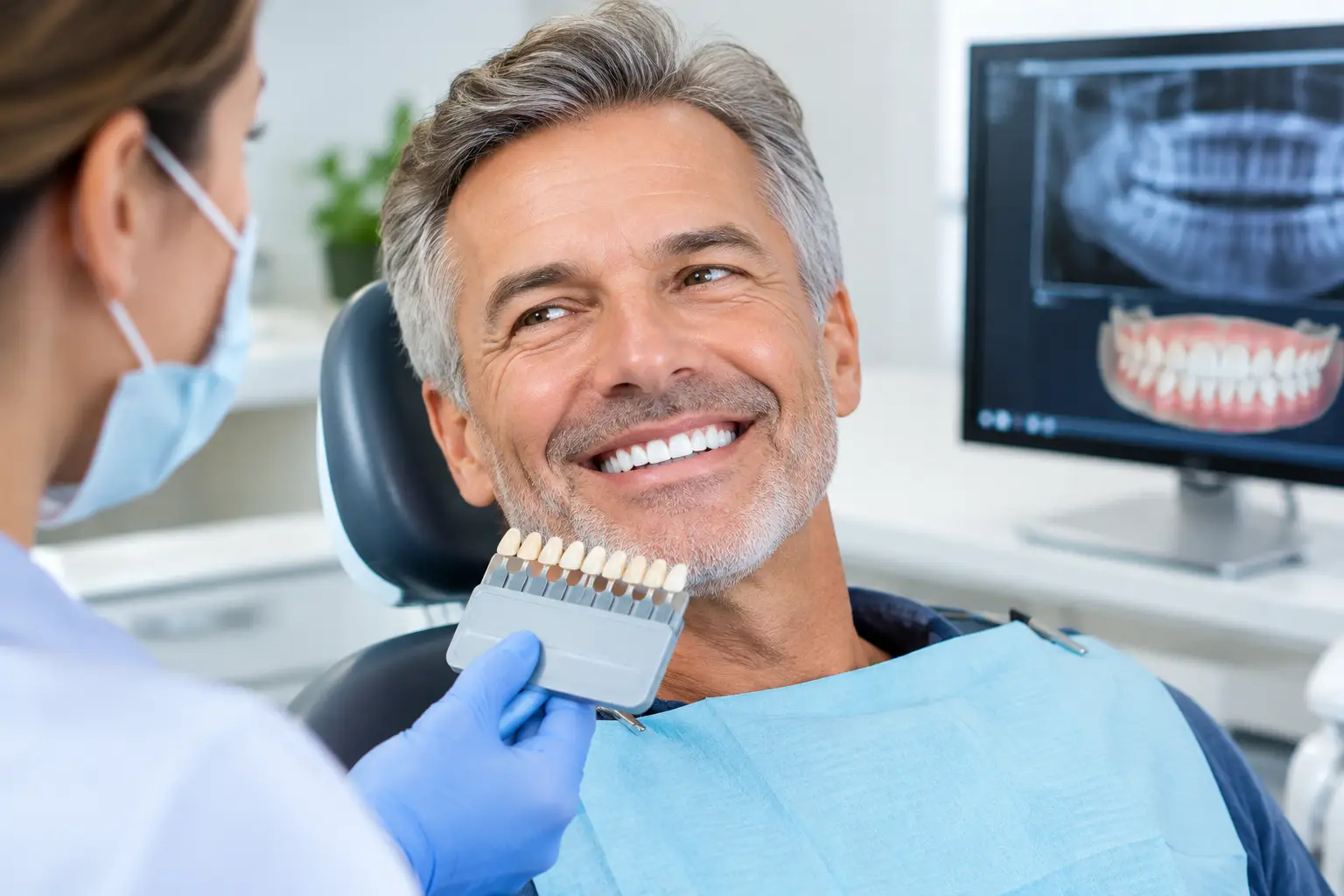
A full mouth rehabilitation case study is not really about creating a perfect-looking smile overnight. It is about helping a person eat comfortably, speak clearly, protect the teeth they still have, and feel at ease when they smile. For many patients, the need develops gradually after years of worn teeth, missing teeth, old dental work, gum concerns, or dental visits put off because of anxiety or a busy schedule.
Full mouth rehabilitation is a personalized process, not one standard procedure. It may include crowns, bridges, implants, fillings, root canal treatment, extractions, periodontal care, or cosmetic improvements. The right plan depends on the health of the teeth and gums, the way the bite fits together, the patient’s goals, timeline, and budget.
The following composite example reflects the type of thoughtful planning involved. It is not a promise of a particular outcome, because every smile, medical history, and treatment plan is different.
Full Mouth Rehabilitation Case Study: Where It Started
Our example patient is a working adult in their early 60s who had not had consistent dental care for several years. They came in because chewing had become difficult, especially on the right side. A front tooth had chipped, several older crowns felt loose, and they were increasingly self-conscious about smiling in family photos.
At the first visit, the patient also shared a concern many people have: they were worried that the answer would be to remove every tooth. That is a common fear, but full mouth rehabilitation does not automatically mean full-mouth extraction or dentures. A careful evaluation begins by determining which teeth can be predictably treated and maintained.
The examination included digital X-rays, a review of the patient’s medical and dental history, an evaluation of the gums, and a close look at the bite. The dentist found a combination of concerns: advanced wear from years of grinding, decay around the edges of older restorations, two teeth with poor long-term prognosis, missing back teeth, and gum inflammation.
The patient also had a collapsed bite. When back teeth are missing or severely worn, the jaw may close more than it should. This can affect chewing efficiency and may contribute to facial muscle fatigue, jaw discomfort, and a smile that appears shorter or more worn than before.
Building a Plan Around Health First
A comfortable, lasting result starts with a healthy foundation. Before placing final crowns or replacing missing teeth, the treatment plan focused on controlling infection and improving gum health.
The first phase included professional cleanings and gum care, treatment for active decay, and replacement of failing fillings where possible. One tooth needed root canal therapy before it could be restored with a crown. Two teeth could not be saved safely, so extraction was recommended. These decisions were discussed plainly, including why each option was being considered and what could happen if treatment was delayed.
For patients with extensive needs, sequencing matters. Trying to complete every procedure at once may not be comfortable, practical, or financially manageable. In this case, care was divided into phases so the patient could address urgent problems first and move forward with a clear plan.
Once the gums were healthier and temporary restorations were in place, the dentist could better assess the proposed bite position. This step was especially valuable because the patient had adapted to worn and missing teeth over many years. Temporary restorations allowed the patient to test a more comfortable bite before final work was completed.
Restoring Function Before Focusing on Appearance
The next goal was to restore dependable chewing. The patient had been avoiding foods such as apples, steak, and crunchy vegetables. That may seem like a small lifestyle adjustment, but it can change how someone eats, socializes, and feels about their health.
After the extraction sites healed, dental implants were selected to replace missing back teeth. Implants are a strong option for many patients because they replace the tooth root and can support an individual crown. However, they are not the best choice for everyone. Healing time, bone health, medical conditions, smoking status, and cost all deserve a thoughtful conversation.
In some cases, a bridge or removable partial denture may be more appropriate. The best solution is the one that meets the patient’s needs while supporting long-term oral health, not simply the most extensive treatment option.
For this patient, the remaining weakened teeth were protected with crowns. The front teeth received carefully planned restorations that improved their shape and strength while keeping the result natural-looking. Rather than making every tooth bright white or identical, the goal was to create a smile that fit the patient’s features and felt like their own.
How the Patient’s Bite Guided Every Decision
When multiple teeth need treatment, dental care is not just about repairing one tooth at a time. Each restoration affects the bite. If crowns or bridges are placed without considering how the upper and lower teeth meet, the result may feel uncomfortable or place excess pressure on certain teeth.
The dentist used models, photographs, and temporary restorations to plan the final smile and bite. Adjustments were made during follow-up visits based on how the patient spoke, chewed, and felt. This took patience from both the patient and the dental team, but it helped reduce surprises before the final restorations were placed.
The patient also received a nightguard after treatment was complete. Because signs of grinding had contributed to the original wear, protecting the new restorations was part of protecting the investment in their oral health.
What Changed After Treatment
By the end of treatment, the patient could chew on both sides again and no longer felt sharp edges or loose crowns when eating. Their gums were healthier, the bite felt more balanced, and the front teeth looked more even without appearing artificial.
The emotional change was just as meaningful. At a follow-up visit, the patient described being able to order foods they had avoided for years and smiling more freely at a family gathering. Those are real measures of success, alongside healthy gums, stable restorations, and improved function.
Still, full mouth rehabilitation is not a finish line where dental care stops. Crowns, bridges, implants, and natural teeth all require daily brushing and flossing, regular professional cleanings, and periodic exams. Even excellent dental work can develop problems if gum disease, decay, grinding, or missed visits are allowed to return.
What a Full Mouth Rehabilitation May Include
Every plan is different, but comprehensive treatment often combines several services over time. Depending on the patient’s needs, a plan may include:
- Periodontal treatment and professional cleanings to support healthy gums
- Fillings, root canal therapy, or crowns to preserve treatable teeth
- Extractions when a tooth cannot be predictably saved
- Dental implants, bridges, or dentures to replace missing teeth
- Bite adjustment, temporary restorations, and a nightguard for protection
- Veneers or cosmetic restorations when appearance is also a concern
At Katz Family Dental Care, patients can receive guidance on many of these services in one familiar setting. That coordinated approach can make a complex treatment plan feel more manageable, particularly for busy adults and families.
When to Ask About Comprehensive Treatment
You may benefit from a conversation about full mouth rehabilitation if you have several missing, broken, worn, or painful teeth; multiple old crowns or fillings that are failing; trouble chewing; ongoing jaw fatigue; or a smile that no longer feels like you. You do not need to know exactly which procedures you need before scheduling a visit.
A complete examination gives you the information to make decisions at your own pace. Ask what needs attention now, what can safely wait, what alternatives are available, and how treatment may be phased. A caring dental team should make room for those questions.
If your smile is affecting your comfort or confidence, start with one appointment and one honest conversation. The path forward may be more achievable than it feels today.