


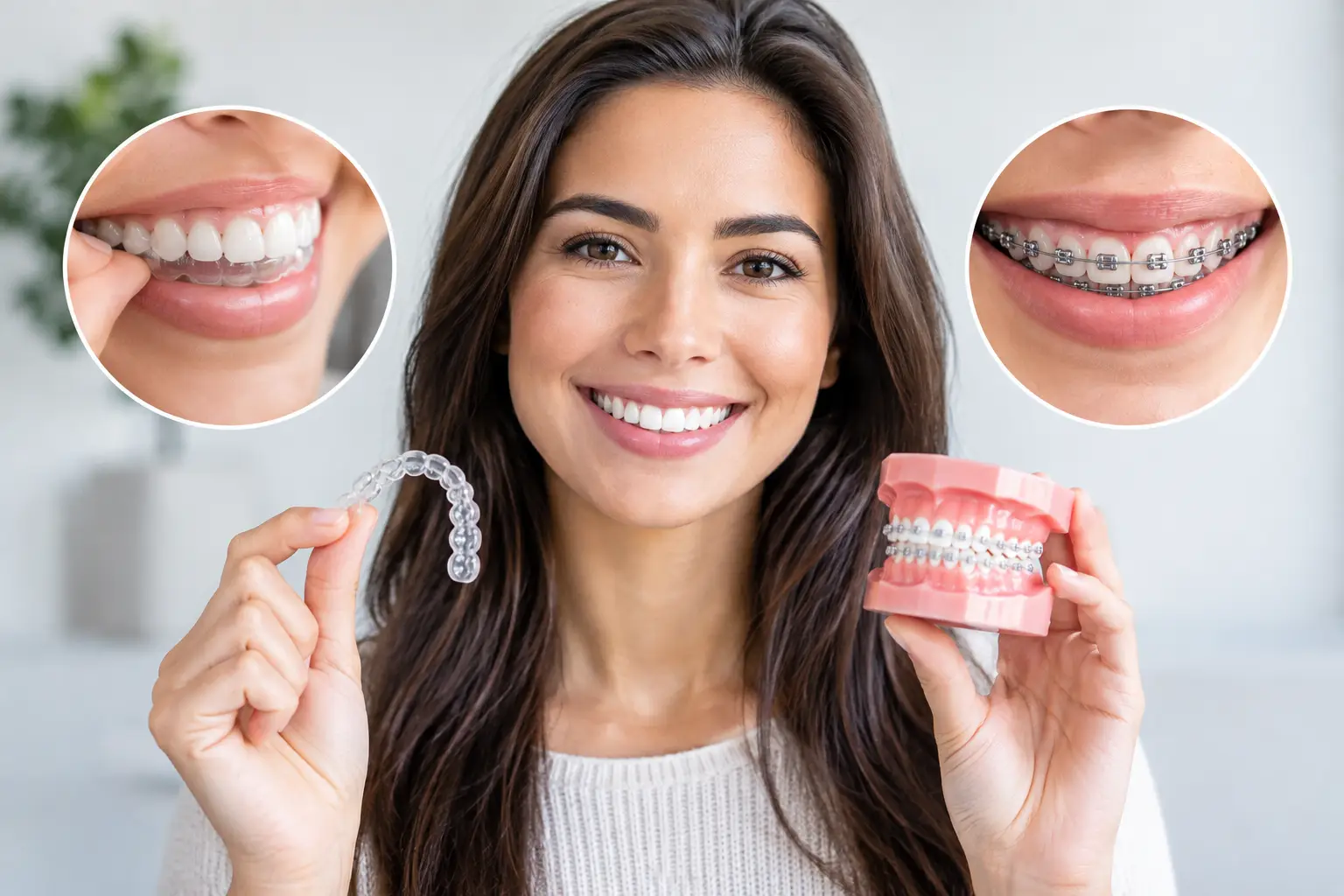
A straighter smile can feel like a big decision when you are balancing school, work, family schedules, and everyday comfort. Invisalign versus braces treatment is not simply a choice between clear trays and metal brackets. The best option depends on how your teeth need to move, how consistently you can follow your treatment plan, and what will make orthodontic care manageable for your life.
Both options can create healthy, confident smiles. A dental evaluation is the right place to start because your provider can look beyond what you see in the mirror, including your bite, jaw alignment, gum health, and the position of each tooth.
Invisalign Versus Braces Treatment: The Main Difference
Traditional braces use brackets attached to the teeth and a wire that guides teeth into position over time. Your dental provider adjusts the wire at scheduled visits to continue that movement. Braces stay on throughout treatment, so they are always working without requiring you to remember to put them in.
Invisalign treatment uses a series of clear, custom-made aligners. Each set is designed to make small, planned changes to tooth position. You wear an aligner for most of the day, then switch to the next set on the schedule your provider recommends. Small tooth-colored attachments may be placed on certain teeth to help the aligners create precise movement.
Clear aligners are removable, while braces are fixed. That one difference shapes many of the practical considerations for patients and families.
Appearance and Everyday Confidence
Many adults and teens prefer Invisalign aligners because they are clear and generally less noticeable in conversations, photos, and professional settings. They can be removed for a special occasion, but they need to go right back in afterward. Removing aligners too often can slow progress.
Braces are more visible, though modern brackets may be smaller and more comfortable than patients expect. For children and teens, colorful elastic bands can even make braces feel more personal. The right choice is not always the least visible one. Some patients feel more confident knowing braces are fixed in place and do not depend on daily wear habits.
Eating and Oral Hygiene
With braces, you will need to avoid foods that can bend wires, loosen brackets, or get stuck around the appliance. Hard candy, popcorn, ice, sticky candy, and very crunchy foods are common examples. Good brushing and flossing take extra care because plaque can collect around brackets and wires.
Invisalign aligners come out for meals and snacks. That means you can continue eating the foods you enjoy, then brush before putting the aligners back in. It can make oral hygiene feel simpler because you can brush and floss normally. However, aligners should not be worn while drinking coffee, soda, tea, or other beverages besides water. Drinks can stain the trays or leave sugar and acid against your teeth.
For either treatment, healthy gums and consistent home care matter. Straightening teeth does not replace regular cleanings and exams. Keeping up with preventive visits helps protect your smile while it is changing.
The Commitment Each Option Requires
Invisalign aligners usually need to be worn about 20 to 22 hours a day. They should only be out for eating, drinking anything other than water, brushing, and flossing. If aligners spend too much time in a case, a backpack, or wrapped in a napkin, treatment may take longer or the teeth may not track as planned.
This responsibility is especially worth discussing with teenagers. Some teens are excellent candidates for aligners and take great care of them. Others may do better with braces because the treatment is always in place. There is no judgment in that decision. Choosing the appliance that fits a patient’s routine gives treatment its best chance to succeed.
Braces require commitment, too. Patients must protect the brackets, brush carefully, and attend adjustment visits. A loose bracket or poking wire should be addressed promptly, but most orthodontic issues are manageable with guidance from the dental team.
Which Cases Can Each Treat?
Both Invisalign and braces can correct many common concerns, including crowding, spacing, crooked teeth, and some bite problems. Clear aligner technology can often treat cases that once required braces alone, particularly when treatment is planned carefully and patients wear their aligners as directed.
Still, braces may be recommended for more complex tooth movements, significant bite concerns, or cases where precise control is needed throughout treatment. In some situations, braces can be the more predictable choice. A provider may also recommend braces when a patient is unlikely to wear aligners consistently.
The only reliable way to know which approach fits your smile is through an examination and digital imaging. A treatment recommendation should be based on your teeth and bite, not on a one-size-fits-all promise.
Comfort, Appointments, and Treatment Time
Both braces and aligners use gentle pressure to move teeth, so it is normal to feel soreness when treatment begins or after an adjustment. With Invisalign, patients may feel pressure for a day or two after changing to a new set of aligners. With braces, tenderness can follow wire adjustments, and brackets may initially irritate the cheeks or lips. Dental wax can help with rubbing while your mouth adjusts.
Treatment length varies widely. Some mild cases may be completed in months, while more involved cases can take a year or longer. Braces and Invisalign can have similar treatment times when they are appropriate for the same type of case. Aligners only stay on schedule when they are worn as directed, while broken braces or missed visits can also create delays.
Appointment schedules differ by treatment plan. Braces typically require periodic adjustments. Invisalign patients may receive several sets of aligners at once and return for progress checks, though regular monitoring remains essential. Your provider will explain how often you should expect to visit and what to do if an aligner is lost or damaged.
Cost and Insurance Questions
The cost of orthodontic treatment depends on the complexity of the case, expected treatment time, the appliances used, and whether additional procedures are needed. Invisalign is not automatically more expensive than braces, and braces are not automatically the lower-cost option. The details of your individual plan matter more than assumptions.
If you have dental insurance, review whether your plan includes orthodontic benefits, age limits, waiting periods, lifetime maximums, and coverage restrictions. Many commercial plans vary significantly. Asking for a clear treatment estimate and insurance review before beginning can help your family plan with confidence.
Do not overlook retainers when considering cost and long-term results. After either Invisalign or braces, retainers are needed to help hold teeth in their new positions. Teeth can shift over time, especially if retainers are not worn as instructed.
Questions to Bring to Your Consultation
A good orthodontic conversation should feel clear, not rushed. Ask which option is most predictable for your specific bite, how long treatment may take, how often you will need appointments, and what daily care will look like. If you are considering Invisalign, ask whether attachments, elastics, or refinements may be part of your plan. If braces are recommended, ask about food restrictions, comfort options, and what to do between visits if a wire or bracket causes discomfort.
At Katz Family Dental Care, patients can discuss orthodontic goals as part of a broader approach to oral health. That matters because a strong treatment plan considers the condition of your teeth and gums, routine preventive care, and the smile goals that matter to you.
The right treatment is the one you can follow comfortably and consistently. Whether that is clear aligners or braces, taking the first step with a thoughtful evaluation can turn a question about your smile into a plan that feels realistic, supported, and worth looking forward to.