


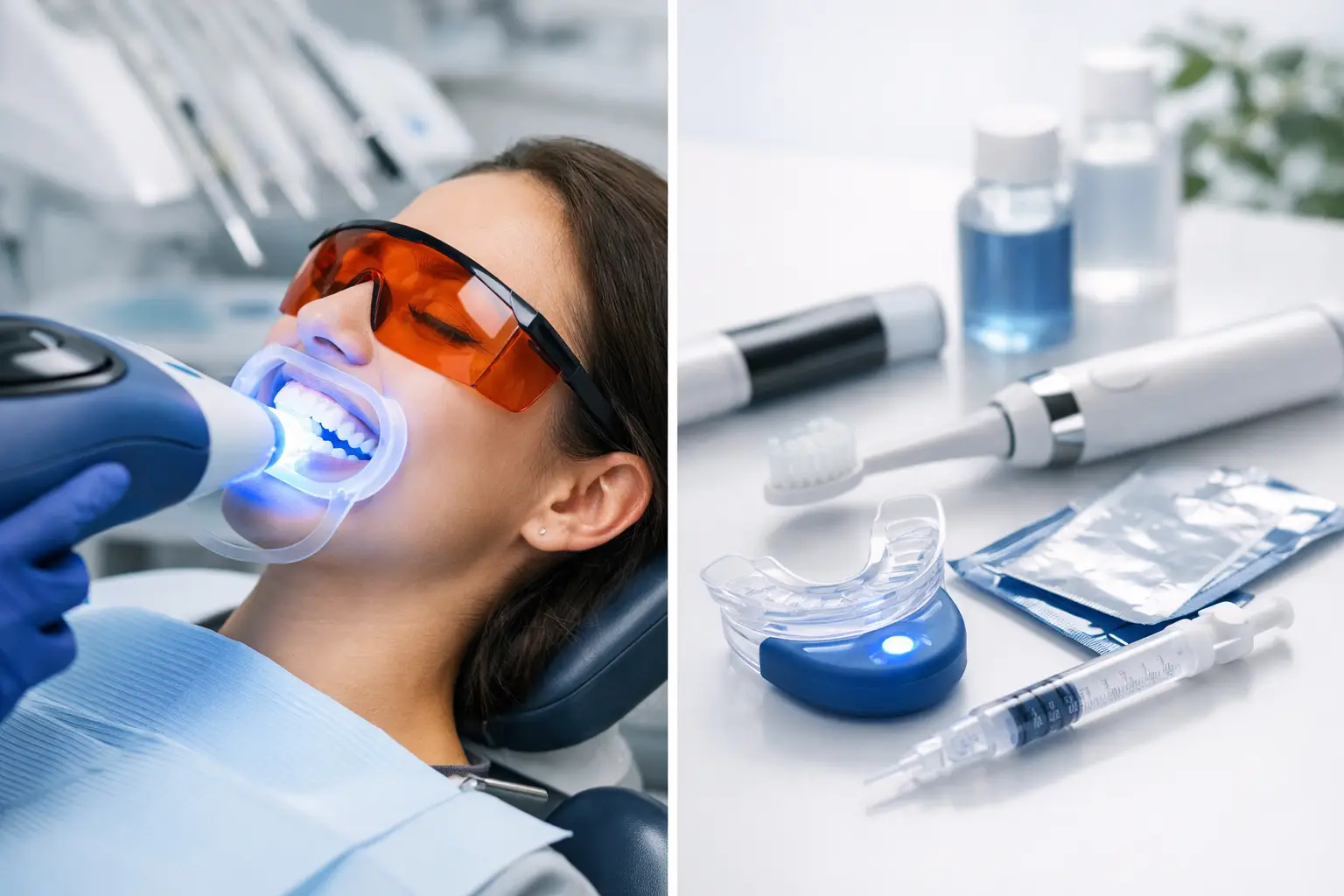
A whitening aisle can make a brighter smile look as simple as picking up a box during a grocery run. But professional versus store whitening is not only a question of convenience or price. The right choice depends on your starting shade, the reason for discoloration, the health of your teeth and gums, and how much change you hope to see.
For some patients, a store-bought product is a reasonable first step. For others, professional whitening offers more predictable results and a safer path, especially when sensitivity, dental work, or uneven tooth color is involved. A quick conversation with your dentist can keep you from spending money on products that are unlikely to give you the result you want.
Professional Versus Store Whitening: The Main Difference
Both professional and store whitening products typically use peroxide-based ingredients to break up stains within the tooth enamel. The difference is in the concentration, the way the product fits your teeth, and the level of supervision involved.
Professional whitening is provided through your dental office or with dentist-directed custom trays. Your dental team first evaluates your smile, checks for concerns such as cavities, gum inflammation, cracks, and exposed roots, and helps determine whether whitening is appropriate. The whitening approach can then be selected around your goals and comfort level.
Store products include whitening strips, gels, pens, toothpastes, rinses, and one-size-fits-most trays. They are easy to find and usually cost less up front. However, they are designed for the general public, not for the shape, sensitivity level, or existing dental work of one individual patient.
The strongest option is not automatically the best one. A product that irritates your gums or causes sharp sensitivity can make it difficult to complete treatment. Whitening should feel manageable, not like something you have to endure.
What You Can Expect From Store Whitening
Store-bought whitening can help with mild surface stains from coffee, tea, red wine, tobacco, and certain foods. Strips tend to provide more noticeable results than whitening toothpaste alone because they remain in contact with the teeth longer and contain an active whitening ingredient.
Whitening toothpaste can be useful for removing surface stains and maintaining results after treatment. It generally does not change the deeper natural shade of the tooth as much as peroxide-based strips or gels. Abrasive toothpastes should also be used thoughtfully, particularly if you already have sensitivity or enamel wear.
The biggest practical challenge with over-the-counter options is fit. Strips may not reach every curve of your teeth, and generic trays can allow gel to touch the gums. This may lead to uneven whitening, gum irritation, or patchy-looking results near the edges of teeth.
Store whitening is often a good fit when your teeth are healthy, your discoloration is mild, and you are comfortable with gradual improvement. It may be less satisfying if you have a special event coming up, want a larger shade change, or have tried products before without seeing much difference.
Why Professional Whitening Can Be More Predictable
Professional whitening begins with an examination, which matters more than many people realize. A dark tooth may be discolored because of an old filling, trauma, decay, medication-related staining, or a problem inside the tooth. Whitening products will not correct every cause of color change, and a dental evaluation can identify when a different treatment is needed.
With professional care, the whitening material is selected and applied with attention to your teeth, gums, and existing restorations. Custom trays, when recommended, help keep whitening gel close to the tooth surfaces while reducing contact with delicate gum tissue. In-office treatment may be a good option for patients who want results in a shorter time frame, while dentist-supervised take-home whitening can offer a more gradual approach at home.
Professional care also makes it easier to adjust the plan if sensitivity develops. Sometimes that means shortening wear time, taking a day off between applications, using a sensitivity-focused toothpaste, or choosing a less intensive schedule. These small adjustments can make a meaningful difference in comfort.
At Katz Family Dental Care, cosmetic decisions are approached as part of your overall oral health. Before whitening, your dental team can help you understand what is realistic for your smile and whether any preventive or restorative care should come first.
Dental Work Will Not Whiten
Crowns, veneers, fillings, bonding, and implants do not respond to whitening gel the same way natural enamel does. This is one of the most common reasons patients notice uneven color after whitening.
If you have a crown or filling near the front of your smile, your dentist may recommend whitening natural teeth first and then discussing replacement of visible restorations, if appropriate. There is no one-size-fits-all answer. The best sequence depends on the location, age, and condition of your dental work, along with your cosmetic goals.
Cost, Time, and Results: Choosing What Fits
Store whitening is usually the lower-cost choice at the register. It can be appealing for patients who want to test the waters or maintain a previous whitening result. The trade-off is that results may be subtler, slower, and less even. You may also need to try more than one product before finding an option that feels comfortable.
Professional whitening generally costs more because it includes clinical guidance, stronger or more precisely managed materials, and, in some cases, custom trays or an in-office visit. The value is not simply the whitening gel. It is the planning, fit, safety screening, and ability to respond if your teeth become sensitive.
Results from either option are not permanent. Coffee, tea, dark berries, tomato-based sauces, tobacco, and normal aging can gradually deepen tooth color again. Good home care and routine dental cleanings help keep surface stains under control. Some patients choose occasional touch-ups, while others are happy with a more natural level of brightness.
It also helps to set a realistic goal. Healthy teeth come in many natural shades, and whitening does not create the exact same result for everyone. Rather than aiming for an artificial-looking white, many patients want a smile that looks fresher, cleaner, and more confident.
When to See a Dentist Before Whitening
Do not start whitening without a dental visit if you have tooth pain, bleeding gums, a cracked tooth, cavities, significant sensitivity, or a single tooth that has suddenly become darker. These symptoms deserve an evaluation first. Whitening over untreated dental problems can worsen discomfort or delay care that your smile needs.
Children and teens should also speak with a dentist before using whitening products. Their teeth and oral development may call for a different approach. If you are pregnant, breastfeeding, or managing a medical condition, ask your healthcare and dental professionals what is appropriate for you.
Even if your mouth feels fine, a professional cleaning may be a smart place to begin. Removing plaque and surface buildup can brighten your smile on its own and gives your dental team a clearer view of the color you are starting with.
A Brighter Smile Should Still Feel Like Your Smile
The best whitening choice is the one that respects your oral health, comfort, timeline, and budget. Store products can be helpful for mild staining and gradual touch-ups. Professional treatment may be the better investment when you want more consistent results, have sensitive teeth, or need guidance around crowns, fillings, or uneven discoloration.
If you are thinking about whitening before a wedding, reunion, job interview, or simply because you miss the look of a brighter smile, bring it up at your next visit. A warm-hearted dental team can help you choose a plan that feels clear, comfortable, and right for the smile you see in the mirror.