


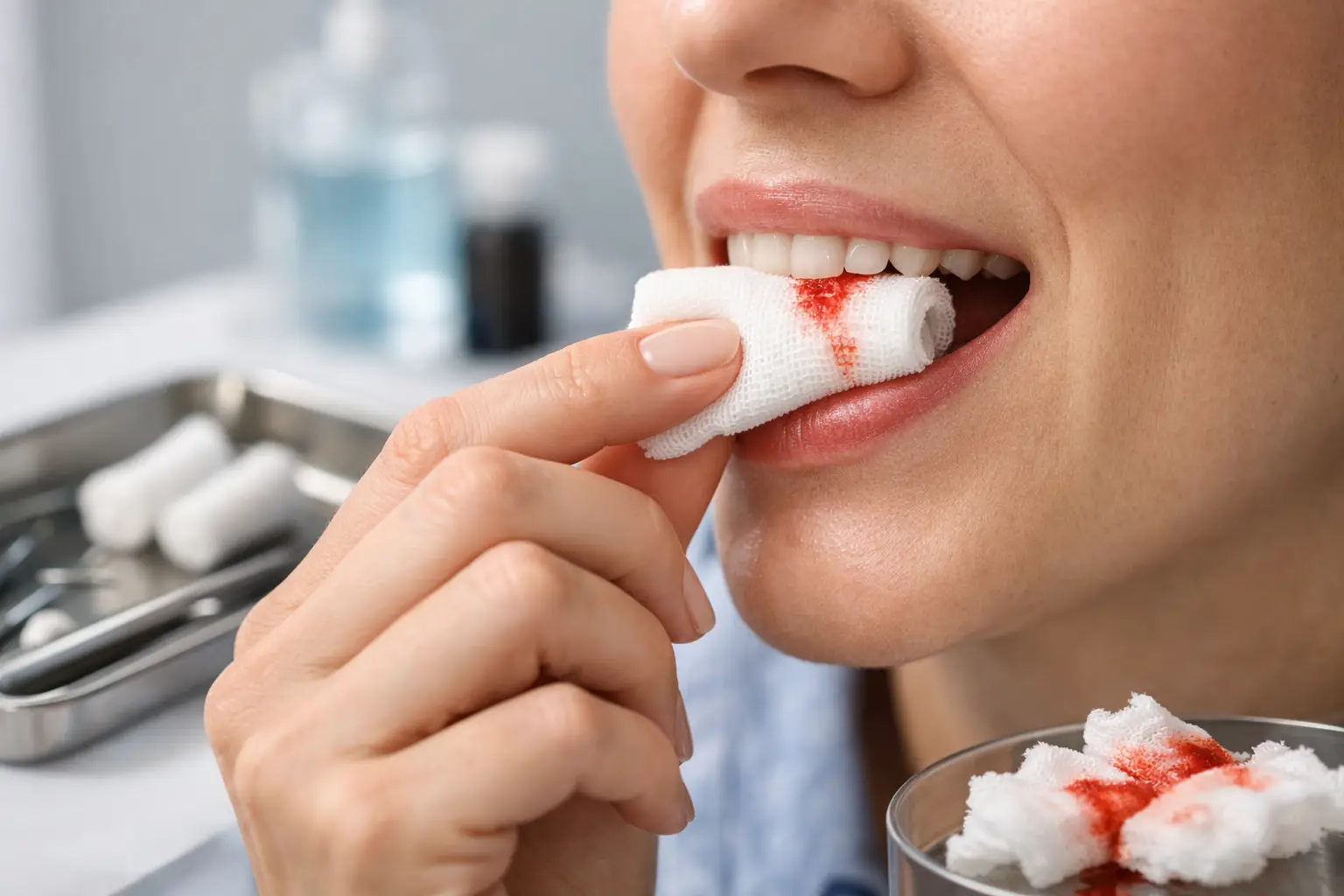
A little blood after a tooth extraction can look more alarming than it is, especially when it mixes with saliva. The key to stop bleeding after extraction is not checking the area repeatedly. A stable blood clot needs steady pressure and time to form, so your first steps at home can make a real difference in how comfortably you heal.
After your procedure, your dental team will give you instructions based on the tooth removed, whether stitches were placed, and your medical history. Those instructions should always come first. The guidance below can help you understand what is usually normal, what to do if oozing continues, and when to call for help.
What normal bleeding looks like after an extraction
For the first several hours, light bleeding or pink-tinged saliva is expected. Many patients notice a slow ooze rather than a continuous flow of bright-red blood. This may continue on and off during the first 24 hours, particularly after getting up, speaking a lot, or eating.
A blood clot forms in the empty tooth socket. It protects the underlying bone and nerves while the gum tissue begins to heal. Because saliva spreads quickly through the mouth, even a small amount of blood can make it seem as though you are bleeding heavily.
More concerning bleeding is bright red, active flow that fills your mouth, keeps soaking through gauze quickly, or does not improve after proper pressure. If you are unsure which situation you have, it is always appropriate to call your dental office for guidance.
How to stop bleeding after extraction at home
The most effective first step is simple: place clean, folded gauze directly over the extraction site and bite down with firm, steady pressure. Keep your mouth closed and leave the gauze in place for 30 to 60 minutes. Try not to talk, chew, or lift the gauze to look at the socket during that time.
When the time is up, remove the gauze carefully. If there is only mild oozing, you may not need another piece. If active bleeding continues, place fresh gauze over the area and repeat the same steady pressure for another 30 minutes. Sitting upright or resting with your head elevated can also help reduce bleeding.
If you do not have gauze, a plain black tea bag can sometimes be used as a temporary alternative. Moisten it with clean water, squeeze it until it is damp rather than dripping, place it over the site, and bite gently but firmly for about 30 minutes. Tea contains tannins that may support clotting. Do not use herbal tea, tissue, cotton balls, or loose paper products, which can break apart and stick to the wound.
Resist the urge to rinse, spit, or use your tongue to test the area. These actions can dislodge an early clot and restart bleeding. Swallow normally instead. If your mouth feels full of saliva, lean forward over a sink and allow saliva to fall out gently rather than forcefully spitting.
What to do during the first day
For the first 24 hours, choose soft, cool or lukewarm foods and chew on the opposite side of your mouth. Yogurt, applesauce, mashed potatoes, eggs, and soup that has cooled down are often easier choices. Hot drinks and hot foods can increase blood flow and may restart oozing, so save coffee, tea, and hot soup for later.
Avoid strenuous exercise, heavy lifting, and bending over for the rest of the day. Raising your heart rate and blood pressure can make the extraction site bleed again. Plan for a quieter day whenever possible.
Take medications exactly as directed by your dentist or physician. If you need a pain reliever and your dental team has not advised otherwise, avoid aspirin because it can interfere with normal clotting. Do not stop prescription blood thinners, such as warfarin, apixaban, rivaroxaban, clopidogrel, or aspirin prescribed for a heart or vascular condition, unless the clinician who manages that medication tells you to do so. Stopping these medicines on your own can be dangerous.
Things that can restart bleeding
Smoking and vaping are especially risky after an extraction. The suction motion can disturb the clot, and tobacco or nicotine can slow healing. Avoid both for as long as your dentist recommends. Do not use straws either, even for smoothies or milkshakes, because suction can pull at the clot.
Alcohol should also be avoided for at least the first day and longer if you are taking certain pain medicines or antibiotics. It can irritate the healing area and may interact with medication. Vigorous mouth rinsing, brushing directly over the socket, and poking at stitches are other common causes of renewed bleeding.
Beginning the day after your extraction, your dentist may recommend gentle warm saltwater rinses. Let the water move around your mouth softly, then let it fall out without forceful spitting. Continue brushing and flossing the rest of your mouth carefully, but give the extraction area room to heal.
When bleeding needs a call to the dentist
Call your dental office if you have followed the pressure steps correctly and still have active, bright-red bleeding after about two hours. You should also call if you are repeatedly soaking through gauze, passing large clots, or cannot tell where the blood is coming from.
Certain health conditions and medications can change what is expected. Contact your dental team sooner if you take blood thinners, have a known bleeding disorder, have liver disease, or had a complicated surgical extraction. Children, older adults, and patients who are feeling anxious after treatment may also benefit from a quick check-in rather than trying to manage uncertainty alone.
Seek urgent medical attention if bleeding is severe and will not slow, or if it occurs with trouble breathing, trouble swallowing, fainting, chest pain, severe weakness, or facial swelling that is rapidly worsening. These symptoms need prompt evaluation.
Pain that becomes stronger several days after an extraction may point to a different concern called dry socket. It often causes a deep, throbbing pain that can spread toward the ear or jaw, sometimes with an unpleasant taste or odor. Dry socket is not usually heavy bleeding, but it does require a call to your dentist so you can be made comfortable and treated appropriately.
Give the clot the quiet time it needs
Healing after an extraction is a process, not a test of how quickly you can get back to normal. Most mild oozing settles with clean gauze, uninterrupted pressure, and a calm first day. If something does not feel right, you do not need to guess. At Katz Family Dental Care, our warm-hearted team members are here to help patients understand their aftercare and know when an extraction site needs attention.